 EN
EN AR
AR NL
NL FR
FR DE
DE EL
EL HI
HI IT
IT JA
JA KO
KO PT
PT RU
RU ES
ES TL
TL ID
ID SR
SR UK
UK VI
VI HU
HU TH
TH TR
TR FA
FA SW
SW UR
UR TA
TA KK
KK
Modern hospitals have evolved into more than just centers for medical treatment they are reflections of progress, trust, and innovation. Every aspect of a hospital, from its cleanliness to how efficiently it operates, shapes how patients and visitors perceive its quality of care. Service robots now play a major part in enhancing that image. They don’t just perform simple tasks like delivering supplies or guiding visitors; they represent a hospital’s dedication to modern, efficient, and patient-focused care. By using these advanced tools, hospitals streamline daily operations, reduce staff workload, and demonstrate their commitment to technology-driven improvement and compassionate service.
Elevating Patient Perception: Demonstrating Technological Leadership and Care
When patients see a hospital using service robots, it immediately creates a sense of trust and confidence. It sends a strong message that the hospital values innovation, precision, and modern care. In healthcare, technology has a big influence on how people judge the quality of treatment they receive. Service robots contribute to that perception the moment someone enters the hospital. Whether it’s a robot greeting visitors, guiding them to their appointments, or safely delivering medication, these interactions make patients feel that the hospital is organized, efficient, and forward-thinking.
A great example is Seoul National University Hospital in South Korea, where robots are used to transport medicines, meals, and test samples between departments. This system allows nurses to focus more on patient care rather than routine delivery tasks, improving both efficiency and service quality. Visitors often describe these robots as “symbols of a modern hospital,” reinforcing the image of a technologically advanced and reliable institution.
But beyond convenience, service robots also create emotional comfort. Their presence shows that the hospital is committed to improving patient experiences and ensuring safety. Every automated delivery or polite greeting adds to a sense of care and professionalism. In the end, these robots represent more than just machines they embody a hospital’s promise of innovation, compassion, and dedication to better healthcare.

Intelligent Wayfinding: Using Natural Language Processing to Guide Patients Efficiently
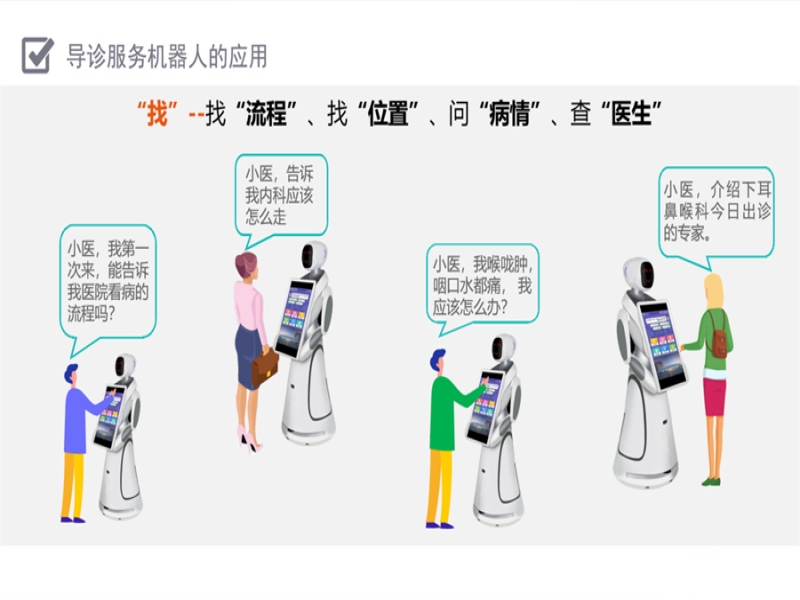
Finding your way around a large hospital can be stressful, especially when you’re anxious about a loved one or a medical appointment. Intelligent wayfinding robots are transforming that experience by making navigation easier, more personal, and less overwhelming. Instead of struggling with maps or looking for staff, visitors can simply ask a robot for help using natural, conversational language. With the help of natural language processing (NLP), these robots can understand questions like “Where is the radiology department?” and respond just like a friendly staff member either giving directions or even escorting visitors to their destination.
At Tan Tock Seng Hospital in Singapore, for instance, these robots are stationed in the lobby to guide patients and visitors to different departments. Their ability to understand speech and provide accurate guidance reduces confusion and saves time, especially for elderly patients or first-time visitors who might find hospital layouts difficult to navigate.
For hospital staff, NLP-powered robots also ease their workload by handling repetitive guidance tasks, allowing nurses and administrators to focus more on patient care. The result is a smoother flow of people, fewer delays, and a calmer environment. Ultimately, intelligent wayfinding robots do more than help people get from point A to point B they create a welcoming, efficient, and reassuring hospital experience that reflects genuine care and modern innovation.
Founded in 2013 and headquartered in Suzhou, China, Esseniot is a global provider of automated and integrated intralogistics solutions.