 EN
EN AR
AR NL
NL FR
FR DE
DE EL
EL HI
HI IT
IT JA
JA KO
KO PT
PT RU
RU ES
ES TL
TL ID
ID SR
SR UK
UK VI
VI HU
HU TH
TH TR
TR FA
FA SW
SW UR
UR TA
TA KK
KK
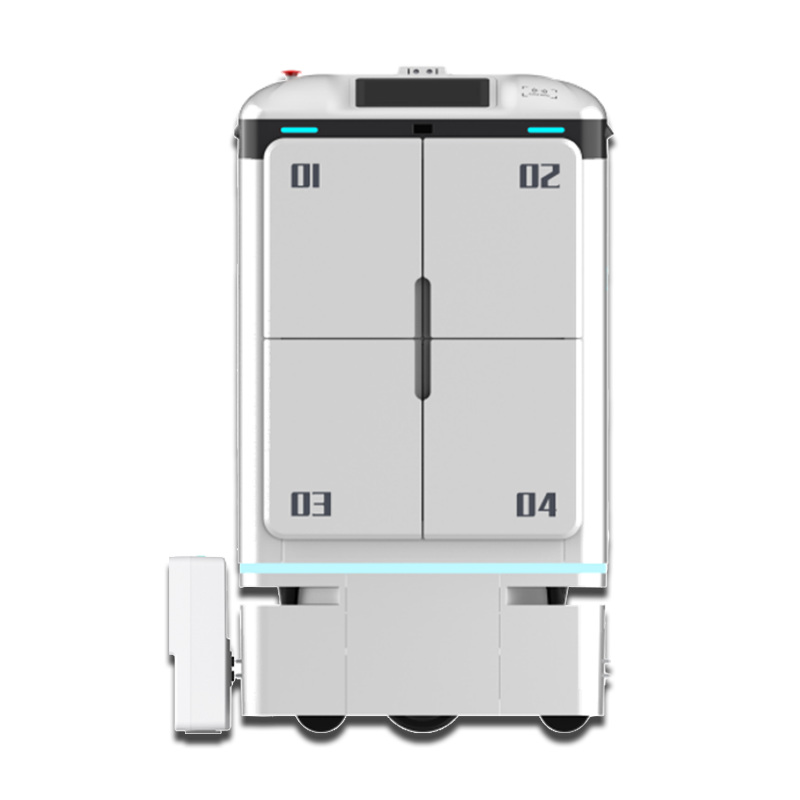
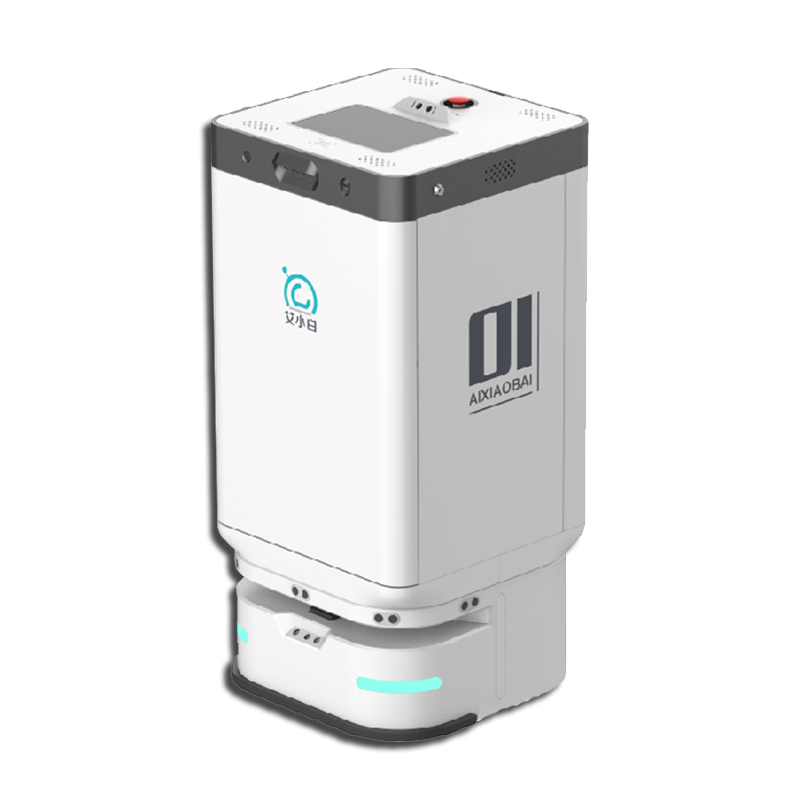
Hospitals today face increasing pressure to provide quicker, safer, and more efficient services—not only in patient care but also in their daily operations. To meet these demands, many hospitals are now using logistics robots that handle essential delivery tasks such as transporting medicines, meals, linens, and lab samples. These smart machines move around quietly, ensuring everything gets where it needs to be without delay. By taking over these routine jobs, the robots allow nurses and staff to spend more time on patient care. As a result, hospital logistics robots are becoming a vital part of modern healthcare, improving efficiency and organization behind the scenes.
Smart Access Integration: Autonomous Navigation Through Doors and Access Points
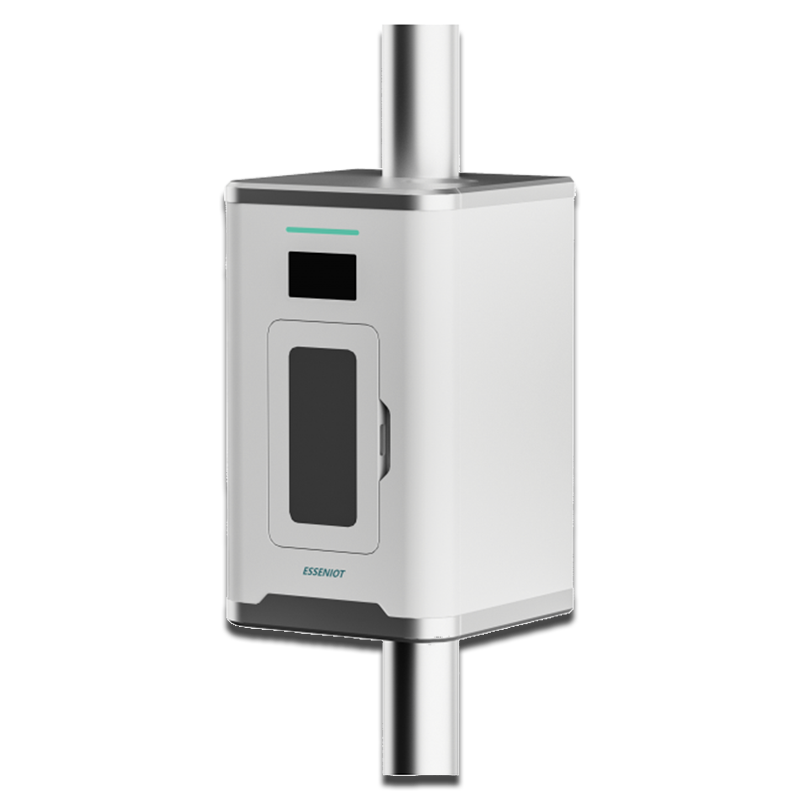
One of the most remarkable features of hospital logistics robots is their ability to move independently through complicated hospital environments, including secured and restricted areas. These robots are built with advanced navigation systems that use sensors, cameras, and wireless communication, allowing them to open doors, call elevators, and pass through access-controlled zones without human assistance. They are designed to maintain safety and privacy while efficiently completing their tasks.
This smart movement is made possible through a connection between the robot’s navigation system and the hospital’s building management network. When a robot approaches a secured door, it automatically sends a signal to the access control system, which verifies the robot’s authorization and unlocks the door for a few seconds. Once the robot passes, the door locks again. This quick, automated process ensures that only approved robots can access sensitive areas like laboratories, pharmacies, or operating rooms.
A real-life example of this can be seen at Massachusetts General Hospital, where delivery robots use RFID badges and Bluetooth technology to open doors and operate elevators on their own. This eliminates the need for staff to escort them, saving both time and effort. For hospitals planning to use similar systems, early coordination between the robot provider, IT, and facility management teams is essential. Proper integration ensures that the robots can move smoothly and securely throughout the hospital, improving overall efficiency and helping staff focus more on patient care.
Advanced Sensor Fusion & AI: Expert Maneuvering in Constrained Clinical Environments
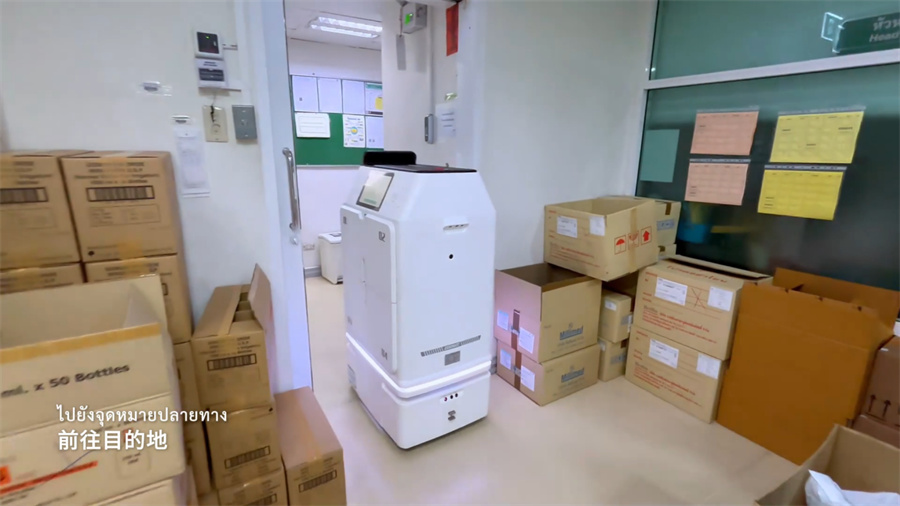
Navigating a hospital is far more challenging than moving around in a warehouse or factory because hospital hallways are often busy and unpredictable. Nurses hurry to patients, equipment may block paths, and people move constantly in wheelchairs or stretchers. To handle this complexity, hospital logistics robots use advanced sensor fusion and artificial intelligence (AI) navigation systems that allow them to understand their surroundings and react safely in real time.
Sensor fusion means the robot gathers information from different sensors—such as LiDAR, cameras, ultrasonic sensors, and infrared detectors—and combines it to create a detailed 3D map of the environment. This lets the robot detect both stationary objects, like walls and carts, and moving ones, like people or other robots. The AI system then processes this data instantly, helping the robot make smart decisions—such as stopping, slowing down, or changing direction—to avoid collisions and continue its task efficiently.
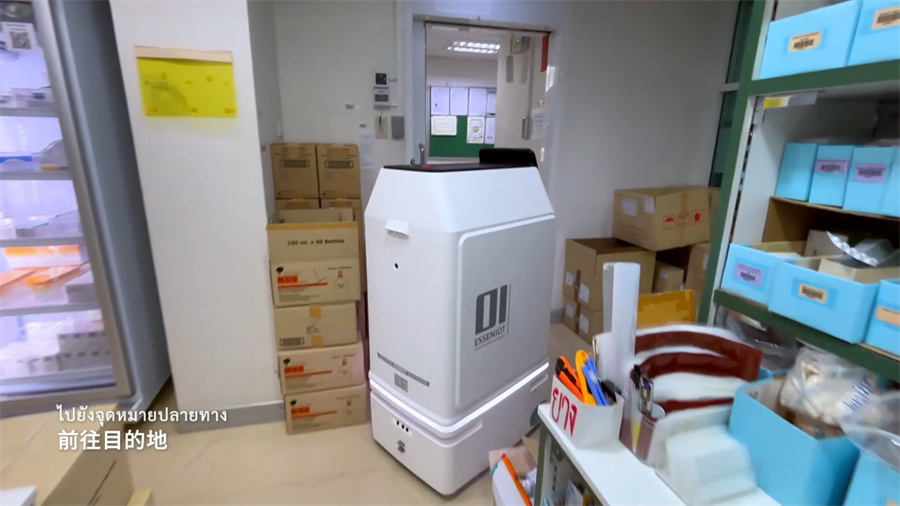
A great example of this can be seen at Seoul National University Hospital, where delivery robots use LiDAR and depth cameras to move through narrow hallways without bumping into people or objects. If someone suddenly crosses their path, the robots automatically pause, recalculate their route, and resume when it’s safe. For hospitals planning to adopt such systems, keeping hallways clear, marking delivery paths, and educating staff about robot movement can make integration smoother. When done right, these AI-powered robots become reliable helpers that move safely and quietly through even the busiest hospital environments, supporting staff and ensuring that supplies and samples reach their destinations on time.
Founded in 2013 and headquartered in Suzhou, China, Esseniot is a global provider of automated and integrated intralogistics solutions.