 EN
EN AR
AR NL
NL FR
FR DE
DE EL
EL HI
HI IT
IT JA
JA KO
KO PT
PT RU
RU ES
ES TL
TL ID
ID SR
SR UK
UK VI
VI HU
HU TH
TH TR
TR FA
FA SW
SW UR
UR TA
TA KK
KK
Medical waste can be generated faster then some might expect in a variety of small hospitals, medical clinics, and labs. Since not all small facilities can accommodate larger waste processing equipment there are compact Medical Waste On-site Disposal System that are available for use. These systems take up a limited space but hold a day's worth of waste to be disposed. They help staff to treat the waste themselves to limit on-site transport. This arrangement makes the operations within a small facility run much smoother and places less strain on the employees when space is limited or access to the facilities is somewhat difficult.
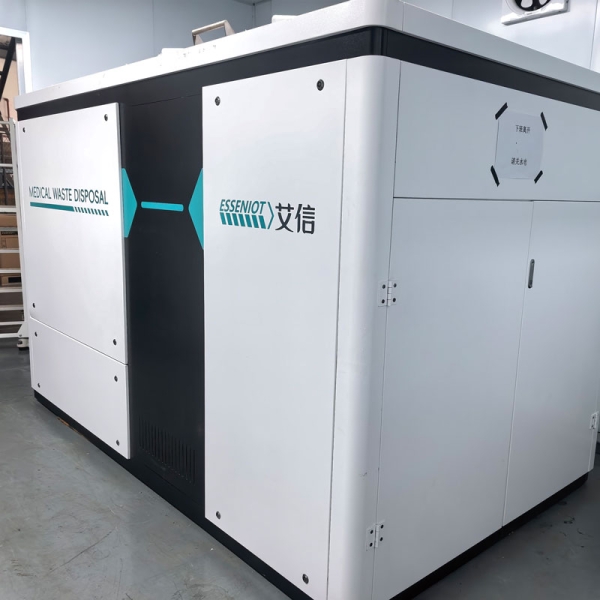
Containerized solutions: no major construction required
These systems in a container are ideal to help solve the problem-there are numerous health centers that just cannot afford to build structures or a complicated infrastructure. A self-contained treatment room is delivered in a container type unit and installed on site. It can commence treatment of waste with little modifications after being connected to standard power and water. The application for practice will mostly be for small, private clinics and remote health centers. For example, a community health center in a small coastal town, which may be comprised of only a few rooms, and some backyard space. Incorporating a full treatment system will just not be possible either time- or cost-wise. A unit in a container can be easily placed and waste treatment can be localized in a area near where it is generated and staff can directly add the waste after following all protocols rather than having to store it until collection day. The setup is rather uncomplicated, as the unit is pre-fabricated and work on site would primarily consist of positioning the unit, connecting it and some safety checks; this would minimize down-time, especially in a busy health facility and prevent disruption to patient care. Following setup, the system is designed to undergo a process cycle which would be implemented to rid the waste of infectivity before disposal. The idea would be useful for remote teams facing issues with transport. All the waste would be treated in a secure area on site rather than having to travel large distances to the treatment center to have it disposed of untreated. This reduces handling as well as builds confidence with regards to safety protocols. The site plan is essential when choosing to have a containerized unit. The available space should be evaluated closely and easy access to dump waste and to make necessary periodic checks must be maintained. Other daily benefits are the presence of proper ventilation as well as a stable surface. The daily workflow also tends to be more organized over time as no further waste would have to accumulate and be dependent on the waste collector's availability.
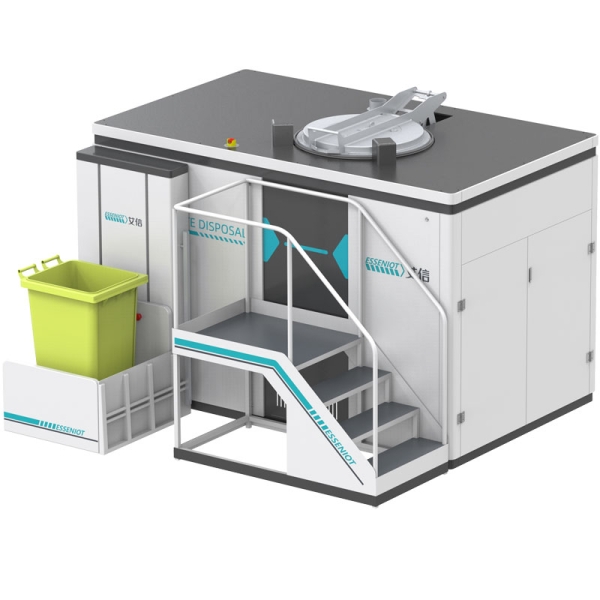
Flexible capacity options for clinics and large hospitals
The benefit of small onsite systems like this one is that this setup is unique to the particular environment that it's located in. Varying quantities of waste will be produced by differing types of health care facilities and it could be important. The volume of waste produced by small dental practices may only be 1-2 bags per day whereas medium sized diagnostic labs will be processing normal samples, used sharps and gloves as well as other waste streams. A major hospital can produce vast volumes of waste, from the E.Rs, operating theaters and wards. These systems are not designed to re-engineer operations but instead to create capacity in line with the volume waste is produced. Some systems will produce little waste daily and be compact, in a utility room or a corner of the outside world, while others will be modular, and another unit added on when required, allowing facilities to not purchase a large system from the start. They will add modules to handle any additional waste volume, for example, if there were more patients or if new departments were to be established within the hospital. An example of this would be a provincial hospital that begins with a compact system designed to deal with ER and laboratory waste. Modules were then added on as new wards were opened, although the initial unit was not affected, preventing a disruption of the day-to-day activities within the hospital. This same facility flexibility will be beneficial in times of flu outbreaks, or other instances when waste will necessarily rise in amount, when facilities will have the option to temporarily alter their internal operations, or temporarily expand their internal capacity, rather than being reliant on external transportation of excess waste or on overflowing overflow storage. When considering this form of waste management, facility managers must examine not only their current waste production levels, but also anticipate what their future waste production will be. Having a scalable system ensures that a facility can readily adapt to changes in demand, without having to invest in an entire new system, therefore, preventing a disruption of their work flow.
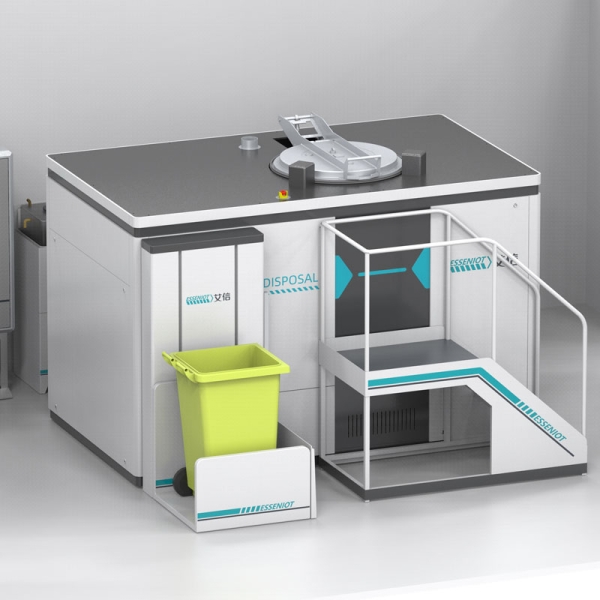
Space comparison: sterilization systems vs. incinerators
Space is a significant consideration when hospitals are determining the management of medical waste. There are two widely used solutions: sterilization systems or incinerators; the first requires a significantly smaller space than the second and are suitable for various types of facilities. Typically, sterilization systems (steam or friction heat units) are small. The majority are designed to sit within a small service area, or as a system contained in containers, away from the building structure itself. They treat the waste by decomposing deadly microorganisms without fire. This design eliminates the need for high stacks, expansive fuel storage and generous safety buffer zones. One can be installed in a small clinic or diagnostic laboratory with relatively few changes to the building's structure. In a real case, a dialysis center was installed in a city clinic, using to be an old storage room at the back, but no interruption of daily operating activities was experienced. Incinerators work differently. They burn waste at extremely high temperatures, requiring more supporting space. Typically, there is a need to provide space for handling fuel, exhaust systems, and safety clearance around the unit. Larger models also need to have proper chimney structures to control emissions. The incinerator area is frequently located in a different building or fenced off part of the premises from patient areas and in a mid-sized hospital, this is usually the case. This is a valid arrangement, provided that it is planned from the beginning. It's easier to see the difference when you look at the expansion needs. Sterilisation systems are often installed in modules or in small units allowing for scaling in a limited space. Once the incinerators are in place, they are more difficult to adjust as they are dependent on the fixed infrastructure. Sterilisation systems are more likely to be integrated into an existing site layout when space is limited. Incinerators can be used in larger hospitals with outside space and larger amounts of waste, but this requires greater commitment of the structure.
Mobility advantages for emergency or remote deployments
Another easy benefit of having compact on-site medical waste systems is that they are easily transferable and can be installed for urgent and remote situations. Time is of the essence during emergencies and waste begins to occur at once. A mobile system can be obtained and installed within a short time frame and near the care area to eliminate long transport distances or treatment away from the care area. In disaster response areas such as typhoon and earthquake, temporary clinics are frequently established in school buildings, tents or open fields. There are no facilities for waste disposal in these areas. A mobile treatment unit is available and can be deployed in a short time once connections are available. This promotes the prevention of contamination buildup and reduces patients and healthcare worker risk. This type of arrangement is also extremely beneficial to the isolated health posts. Within an island community or mountain barangay, trash disposal may not be easily available or there may be distance issues. Using portable systems for collecting and managing trash can take weeks or days away from healthcare workers in the long term in terms of waste storage and in order to practice in-situ management of waste. Some mobile units are constructed inside a container frame or on a trailer-type platform which allows them to be shipped by truck or boat if needed. Upon arrival, they do not require extensive construction activities. The objective is to keep setup easy to do such that a small technical team can get it running as quickly as possible. It also has a safety benefit. When medical waste is not treated and transported, the risk of handling it over long distances is heightened. Application of mobile systems results in closer treatment of waste to where it is generated, thus minimizing exposure during waste transport. Pre-planning access roads, power and safe placement areas prior to deployment can be helpful for planning teams. Although the system is mobile, a stable setup location will ease the use of the system on a daily basis and increase the safety of the persons involved in handling the system.
Ideal for urban hospitals with limited space
One of the most basic challenges that urban hospitals encounter frequently is a lack of space. Wards, laboratories, emergency rooms, storage spaces are already overcrowded in buildings and there is not enough space for additional infrastructure. That's where the compact on-site medical waste systems come in handy. Many urban hospitals are not installing a standalone waste treatment facility, but installing compact treatment units in small service areas, in rooftops or unused corners in the vicinity of the utility rooms. These systems can be used in limited areas and will not be a nuisance to patient flow or involve significant building modifications. In a busy city district, a unit could be mounted close to the loading bay of the hospital to process hospital waste without traversing high through traffic areas such as surgery rooms. Another benefit is the ease of which they can be integrated into an daily work flow. It may be possible to treat waste at the source, rather than having to ship large loads of waste throughout hospitals via elevator or long hallways. This increases patient traffic flow, particularly in hospitals where there is a high patient volume. In a city setting, regulations for safety and environmental control can also be a factor. The controlled treatment systems are fairly small in size and are capable of controlling the hospital with out having to establish large outside facilities. There are even units available for installation on the rooftop to take the maximum possible amount of ground space for patient care. Most hospitals initially get their unit and put it in a high-risk area like a surgery or emergency room. As they see that it works in the day-to-day workflow they are able to incorporate it into other areas of the hospital without taking up any additional space. The overall benefit is the ability to function in a compact area without redesigning the whole hospital infrastructure. They only need to put in a small capacity unit that is appropriate for the area that they are working in and over time expand the unit to handle more waste.
Founded in 2013 and headquartered in Suzhou, China, Esseniot is a global provider of automated and integrated intralogistics solutions.